Basement Waterproofing NJ Solutions for Homeowners Facing Repeated Leaks
A basement that leaks once is frustrating. A basement that leaks every heavy rain, every snowmelt, or every time the sump pump hiccups becomes something else entirely. It becomes a recurring threat to drywall, flooring, storage, indoor air quality, and peace of mind. For New Jersey homeowners, repeated leaks are especially common because the state has such a mixed housing stock, varied soil conditions, and weather patterns that can swing from coastal storms to freeze-thaw cycles in a single season.
The hard part is that many recurring water problems look similar at first. You see a wet wall, a damp corner, a puddle near the footing, maybe a chalky white residue on block walls. It is tempting to treat every case with the same fix: a quick crack injection, a gallon of waterproof paint, or a new dehumidifier. Sometimes those measures help for a while. Often they only delay the real repair.
Effective Basement Waterproofing NJ projects start with a sober diagnosis. Water is persistent, but it is also predictable. It enters for reasons, it follows the path of least resistance, and it tends to reveal patterns if you know what to look for. When a basement has leaked more than once, the goal is not to mask the symptom. The goal is to interrupt the water path, relieve pressure, manage drainage, and protect the structure over the long term.
Why repeated leaks happen in New Jersey homes
New Jersey has a little of everything. Older stone and block foundations are common in some towns. Postwar homes with poured concrete foundations are widespread in others. You also find homes built on sloping lots, homes close to the water table, and neighborhoods with dense clay soils that hold moisture around the foundation after rain.
That local variation matters because basements do not leak for a single universal reason. In one house, the issue is roof runoff pouring next to the footing because downspouts end too close to the wall. In another, the issue is hydrostatic pressure building below grade and forcing water through the cove joint where the wall meets the floor. In a third, water vapor is condensing on cool surfaces, creating the appearance of leakage even when bulk water entry is minimal.
Repeated leaks tend to occur when the original cause was either misidentified or only partially addressed. A homeowner patches a crack but ignores grading. A contractor installs an interior drain but leaves failed gutters untouched. Someone paints the walls with a waterproof coating, but the outside soil remains saturated after every storm. Each measure may reduce symptoms, yet the system as a whole still fails.
In many New Jersey basements, more than one factor is at work. That is why the best repairs are rarely one-product solutions. They are combinations of drainage control, foundation sealing, water collection, and humidity management, chosen according to how the house actually behaves during wet weather.
The first clues worth paying attention to
The location and timing of water entry tell you a lot. Water that appears only during heavy rain points toward surface drainage, roof runoff, exterior grading, or saturated soils around the foundation. Water that appears after several days of wet weather, even without a downpour, often suggests hydrostatic pressure building in the soil. Water that shows up during spring thaw may indicate footing-level pressure, frozen discharge lines, or poor exterior drainage aggravated by melting snow.
Staining also matters. If you see water marks concentrated low on the wall, especially near the floor joint, the problem often begins outside the wall and below grade. If moisture appears around a window, that may be tied to the window well, lintel, caulking, or flashing details. If isolated dampness appears in one vertical line, a crack or tie rod penetration may be responsible. If the entire room feels clammy and cardboard boxes soften without visible puddling, high humidity and condensation may be playing a bigger role than direct intrusion.
Homeowners sometimes focus on the most dramatic wet spot and miss the broader pattern. I have seen basements where the visible puddle formed on the finished side of the room, while the real failure was thirty feet away at a disconnected downspout elbow. Water traveled along the footing and surfaced at the lowest point. That kind of misdirection is common.
Exterior drainage is usually the cheapest place to start
Before anyone talks about excavation, interior drain systems, or wall membranes, it is worth checking the fundamentals outside. A surprising number of repeated leaks come from water being dumped next to the house faster than the soil can carry it away.
The first pass is simple, but it needs a careful eye.
- Check whether gutters overflow, sag, or spill at corners during rain.
- Verify that downspouts discharge well away from the foundation, not just one or two feet.
- Look at grading around the house for low spots, settled areas, or hard surfaces pitched toward the wall.
- Inspect window wells for clogged drains, missing covers, or soil built up too high.
- Note any patios, walkways, or driveway edges that channel water toward the basement wall.
These are not glamorous findings, but they matter. A downspout extension that carries water six to ten feet away can solve what a homeowner thought was a mysterious foundation leak. Regrading a settled planting bed can stop persistent seepage in a corner. Cleaning a clogged gutter can reduce the volume of water hitting the footing during every storm.
That said, exterior drainage corrections are not always enough. If the house sits in heavy soil, on a low lot, or near a high seasonal water table, the foundation may still face pressure even after runoff is improved. In those cases, exterior corrections become one part of a more complete waterproofing plan.
Understanding hydrostatic pressure without the jargon
Hydrostatic pressure sounds technical, but the concept is straightforward. When soil around the basement becomes saturated, water pushes against the foundation walls and under the slab. If that pressure has no easy relief path, it exploits weak points. The wall-floor joint is a common target. Small cracks widen over time. Porous masonry transmits moisture. Floor slabs may even let water rise through hairline openings.
This is one reason waterproof paint disappoints so many homeowners. A coating on the inside wall does not remove the pressure on the outside. It may slow vapor transmission or help with minor dampness, but it does not change the conditions pressing against the structure. In some cases, coatings blister or peel because the wall is still wet behind them.
Homes with repeated seepage after long rains often need a system that manages water at or below footing level, not just on the wall surface. That is where interior drainage systems, sump pumps, and sometimes exterior excavation enter the conversation.
Interior waterproofing systems and when they make sense
Interior waterproofing is often misunderstood. It does not stop water from reaching the outside of the foundation. Instead, it intercepts water after it enters or before it reaches the finished basement area, then channels it safely to a sump pump or drain point. In the right situation, that approach is practical, durable, and far less disruptive than excavating the full perimeter outside.
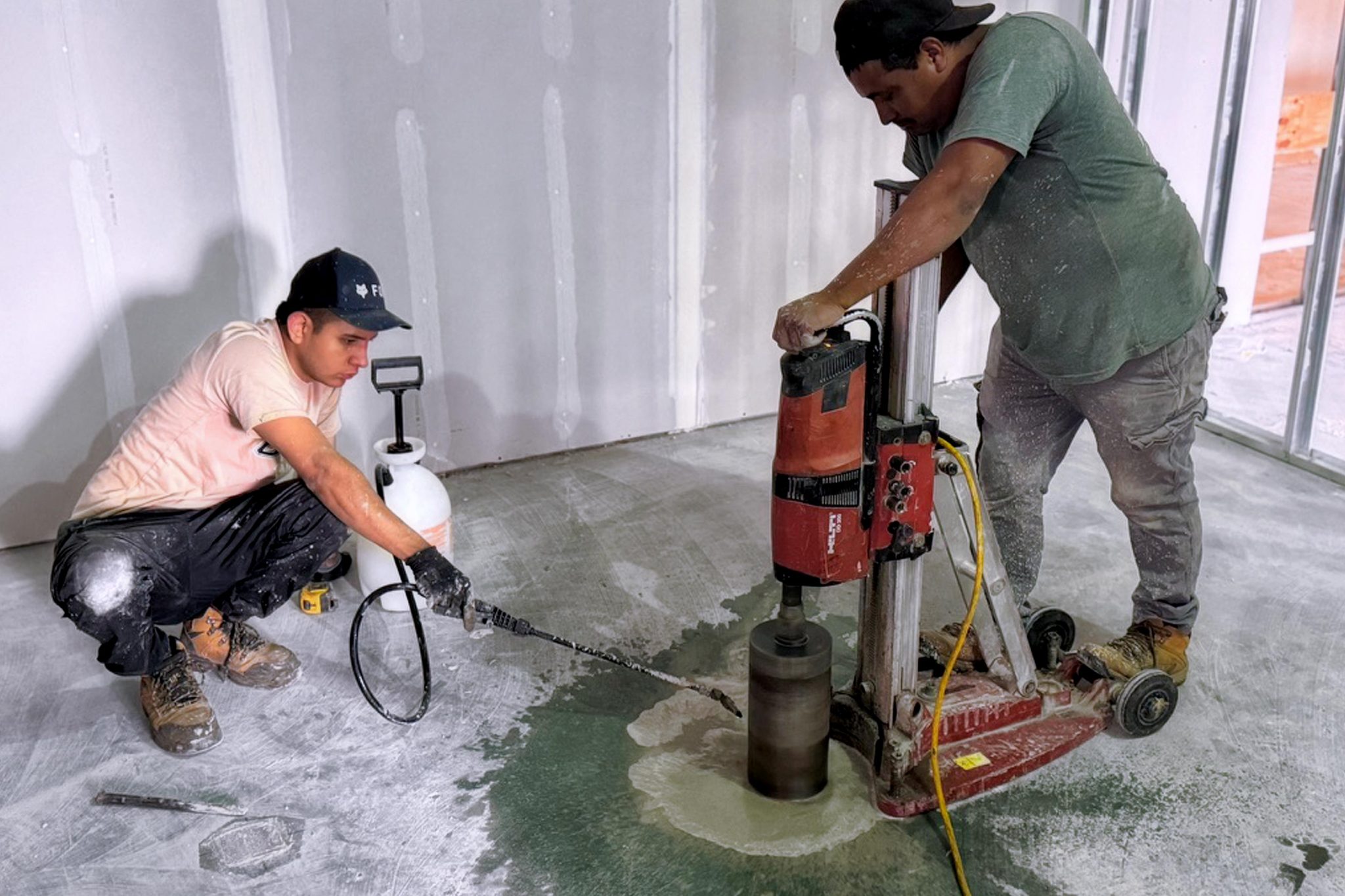
A typical interior system involves cutting a trench along the perimeter slab, placing drainage material and perforated pipe near the footing, and connecting that pipe to a sump basin. A wall vapor barrier or drainage membrane may be added to direct wall seepage down into the system. The slab is then restored.
For many New Jersey homes, especially those with limited exterior access, attached structures, mature landscaping, or neighboring houses close by, interior systems are the most realistic path. They work particularly well for cove joint seepage, wall-floor leakage, and general groundwater management.
The trade-off is important to understand. An interior system controls water entry and protects the basement environment, but it does not leave the exterior wall dry in the same way a full exterior membrane and drain system can. In most homes that is acceptable. In some, especially where the wall itself is deteriorating or bowing from prolonged moisture and soil pressure, exterior work may still be necessary.
When exterior excavation is the better answer
There are times when the only honest recommendation is to go outside and fix the problem at the source. If the foundation wall has serious structural cracking, failed parging, deteriorated mortar joints, or known defects in the original exterior waterproofing, excavation may be warranted. The same is true if water is entering through a specific section of wall that can be isolated and accessed, such as around a below-grade stairwell or a badly leaking window well.
Exterior waterproofing usually involves excavating down to the footing, cleaning the wall, repairing cracks or damaged masonry, applying a true waterproof membrane, installing drainage board, and placing or replacing footing drains where appropriate. It is more invasive and more expensive than interior work, but it addresses water before it enters the wall system.
For some homeowners, this approach feels more intuitive because it tackles the exterior side directly. For others, it can be hard to justify when landscaping, hardscaping, decks, porches, or property lines make access difficult. Cost aside, there are practical limits. If one side of the house is buried under a driveway or close to the neighbor’s structure, excavation may be possible only in sections, or not at all.
The right choice depends on the house, not on a sales script. That is the difference between a tailored waterproofing plan and a one-size-fits-all pitch.
Sump pumps matter more than people think
A sump pump is one of those basement components most people ignore until the power goes out during a storm and the pit starts rising. In a waterproofed basement, the pump is the heart of the system. If it fails, the rest of the setup can be https://dominickqljl841.scriblorax.com/posts/basement-waterproofing-nj-warning-signs-hidden-behind-basement-walls-2 overwhelmed quickly.
For homes dealing with repeated leaks, pump sizing, switch reliability, discharge routing, and backup protection deserve real attention. A basic pump may be enough for a dry basement with occasional seepage. It may not be enough for a house that sees high inflow during nor’easters or spring thaw.
Battery backup pumps are especially valuable in New Jersey because heavy storms and power interruptions often arrive together. A primary pump with no backup is a weak link. So is a discharge line that freezes in winter because it was installed without considering slope, outlet location, or freezing risk. I have seen homeowners replace pumps twice when the real issue was an obstructed or frozen discharge path outside.
A good installer looks beyond the basin. They consider maintenance access, alarm systems, check valves, and where the discharged water goes once it leaves the house. Dumping pumped water too close to the foundation simply sends it back into the cycle.
Crack repair is useful, but only in the right context
Cracks deserve careful evaluation because they can be either the whole problem or just one expression of a larger drainage issue. A non-structural shrinkage crack in poured concrete can often be repaired effectively with polyurethane injection if the goal is to stop isolated seepage. That is a legitimate repair when the crack is stable and the rest of the basement is dry.
The mistake is assuming every wet crack should be treated in isolation. If multiple cracks leak during storms, or if water also appears at the cove joint and across the slab, crack injection alone is unlikely to solve the recurring issue. It may stop one path while pressure simply finds another. That is why experienced contractors assess the full moisture pattern before recommending point repairs.
Block foundations need a different level of caution. Water can fill hollow block cores and travel laterally, making the visible leak location deceptive. In those cases, an interior drainage channel or wall drainage membrane may be more effective than chasing individual seepage points.
Finished basements raise the stakes
Repeated leaks in unfinished basements are disruptive. In finished basements, they become expensive fast. Carpet pad, baseboards, laminate flooring, insulation, drywall, and furniture can all trap moisture and encourage mold growth. Even a small seepage event that seems manageable can spread behind walls and create a much larger remediation problem.
This is where homeowners sometimes make a painful calculation error. They postpone a robust waterproofing repair because the estimate feels high, then spend similar money over the next two years replacing damaged finishes, running commercial dehumidifiers, and cleaning up after each storm. The total cost ends up higher, with far more inconvenience.
If a basement has already leaked more than once and it contains finished space, it is worth treating the problem as a building system issue, not just a cleanup issue. Drying out after each storm is not a strategy.
Moisture, humidity, and air quality are part of the same problem
Not every wet basement has standing water, but many have chronic moisture. That matters because damp basements affect the rest of the house. Musty odors do not stay downstairs. Air moves upward, and basement humidity can contribute to discomfort and indoor air concerns throughout the home.
A dehumidifier is often necessary, but it should not be confused with waterproofing. It manages airborne moisture, not liquid water intrusion. Still, in homes where summer humidity is severe, a dedicated basement dehumidifier can protect materials, reduce odors, and make the space more usable even after the main waterproofing repair is complete.
Vapor barriers, insulation choices, and finishing details also matter. Organic materials installed against masonry without moisture control tend to fail. Closed-cell products and moisture-tolerant assemblies perform better in marginal basement environments. If you are refinishing after a leak history, design the space with the basement’s reality in mind, not as if it were above-grade living space.
How to tell whether a contractor understands the problem
Waterproofing attracts both highly capable specialists and aggressive sales operations. Homeowners facing repeated leaks often feel vulnerable because they want certainty, and certainty is exactly what slick presentations tend to promise. A good contractor will sound different. They will ask about timing, rainfall patterns, previous repairs, pump behavior, grading, and where the water first appears. They will inspect inside and outside. They will distinguish between seepage control and structural repair.
A few signs usually separate a thorough assessment from a rushed pitch.
- They explain the likely water path, not just the product they want to sell.
- They identify what exterior corrections should happen even if you choose an interior system.
- They discuss pump backup, discharge routing, and maintenance, not only the drainage channel.
- They are candid about what their solution does and does not do.
- They do not treat every crack, every wall type, and every lot condition as the same job.
If you hear absolute guarantees without a careful diagnosis, be cautious. Repeated leaks deserve real investigation. The best Basement Waterproofing NJ professionals know that water problems are local, specific, and often layered.
Cost expectations and what drives them
Prices vary widely, and they should. A simple crack injection is not in the same category as a full-perimeter interior drainage system with a sump pump and battery backup. Exterior excavation on one accessible wall is different from excavating multiple sides around patios, landscaping, and utility lines.
What drives cost most is not just square footage. Access matters. Foundation type matters. Water volume matters. Finish materials matter if protection and restoration are part of the job. Electrical work for dedicated pump circuits or alarms can add to the total. So can permits in some municipalities, depending on the scope.
Homeowners often ask whether it is better to patch selectively or commit to a larger system. The answer depends on confidence in the diagnosis. If the problem is clearly isolated, targeted repair can be sensible. If the basement has a history of water in multiple areas, repeated patching usually becomes false economy.
Seasonal timing and why some leaks appear to vanish
One reason homeowners delay action is that leaks can be inconsistent. A basement may stay dry all summer, then flood during one fall storm, then stay quiet until spring. That stop-and-start pattern creates doubt. People wonder whether the problem fixed itself or whether the last cleanup solved it.
Usually, the conditions simply have not repeated yet. Saturated winter soils, blocked frozen discharges, spring melt, and late-summer cloudbursts stress a basement in different ways. A repair plan should account for when the issue appears, not just whether the basement is dry on the day of the estimate.
If possible, document leaks as they occur. Take photos, note rainfall conditions, mark where water first appears, and record whether the sump pump was running or whether power was interrupted. Those details help a contractor distinguish surface water from groundwater and isolated defects from broader hydrostatic pressure.
Practical next steps for homeowners dealing with repeat leakage
If your basement has leaked more than once, resist the urge to jump straight to a product. Start with observation. Walk the exterior during or immediately after rain if it is safe to do so. See where roof runoff lands, where puddles collect, and whether the grade carries water away or back toward the house. Inside, identify whether the leak begins at a crack, under the wall, around an opening, or across the floor.
Then get the fundamentals in order. Gutters, downspouts, and grading are basic, but they are foundational. If those issues are obvious, fix them first or at least factor them into any larger waterproofing plan. After that, speak with a contractor who can explain the water path in plain language and propose a solution that fits the actual failure mode.
For many New Jersey homeowners, the right answer is a combination approach: exterior drainage corrections to reduce the load on the house, an interior drainage and sump system to manage groundwater reliably, and selective crack or opening repairs where needed. For others, especially where a wall itself is compromised, exterior excavation is the honest fix.
Repeated leaks are discouraging, but they are rarely unsolvable. The key is to treat the basement as a system under stress, not as a series of isolated wet spots. Once you identify how water reaches the foundation and where the structure allows it through, the repair becomes much more straightforward. That is what successful Basement Waterproofing NJ work looks like in practice, not magic, not gimmicks, just careful diagnosis and durable control of water where it actually moves.
ARD Waterproofing
Address: 98 Smull Ave, West Caldwell, NJ 07006
Phone number: +12016465936
FAQ About Basement Waterproofing NJ
What is the best waterproofing method for a basement?
The best overall approach to waterproofing a basement is a combined exterior and interior system that stops water at the foundation wall and safely manages any moisture that gets through.
What is the average cost to waterproof a basement?
The average cost to waterproof a basement ranges from $2,500 to $15,000, with most homeowners paying around $5,200 for a complete project.
Can a basement be waterproofed from the inside?
Yes, a basement can be waterproofed from the inside, and it is often the most affordable and least disruptive method.